

HEAT is a not particularly well-known book by Arthur Herzog, published in 1978 and which I first read around 1980. This book made quite an impression on my (much!) younger self, and having unearthed it from a dusty bookshelf I gave it a fresh read.
Herzog’s better known works include Earthsound and The Swarm – the latter perhaps most famous for the 1978 film based upon the 1974 book. With Michael Caine & Richard Chamberlain, and directed by Irwin Allen, we’re looking at classic bad scifi disaster movie territory, and deliver on this promise it certainly did:
“The film received overwhelmingly negative reviews from critics and was a box-office bomb, although praise was given to the costume design. It has been considered to be one of the worst films ever made.”
Wikipedia Page for The Swarm
The writing is, sadly, nothing spectacular. The characters are a bit cliché, there are attitudes very much “of the era” on display. Parts would be worthy of consideration for the Bad Sex In Fiction Award.
So why bother with this book at all then? Well a couple of important reasons.
Firstly, this book is nearly fifty years old now. But you will see so much within it that is current in terms of climate change that you might be forgiven for thinking that it was written (badly) today. It’s somewhat sad and depressing that plenty has been known about mankind’s impact upon climate for so long, yet we’re only just now, grudgingly, starting to make limited changes in some parts of the world – whilst other parts are, or may, go backwards.
Secondly, it contains within it a concept which I believe to be very important yet not widely discussed or considered. More on that later.
The basic premise is that the science starts to show that a period of rapid temperature rise will soon begin, and that the end result of this would be a runaway greenhouse and Earth becoming like Venus. Not ideal.
Along the way, various shady characters (whom these days might be called Big Oil and The Deep State!) try to keep the developing crisis under wraps. Climate Change Deniers one might call them.
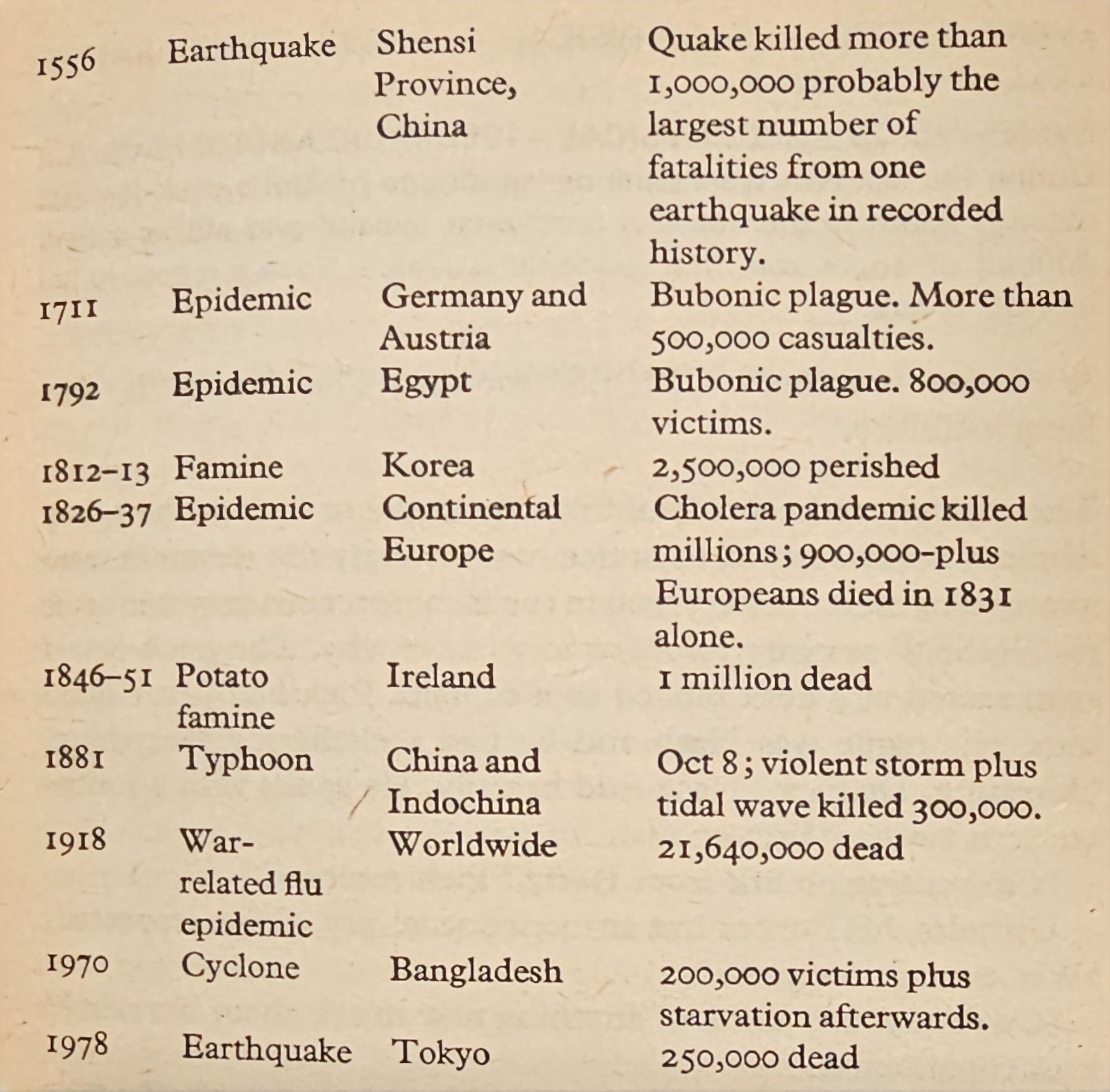
There are a couple of interesting tables in the book – I remember them fascinating me at the time.
This list of disasters was something I’d never seen the like of before.
No Wikipedia Lists of Disasters back then. No World Wide Web.
Just the school library (which was not huge) and the public library (which felt huge but tiny when compared with a Legal Deposit Library or the magnificent Central Reference Library in Manchester).


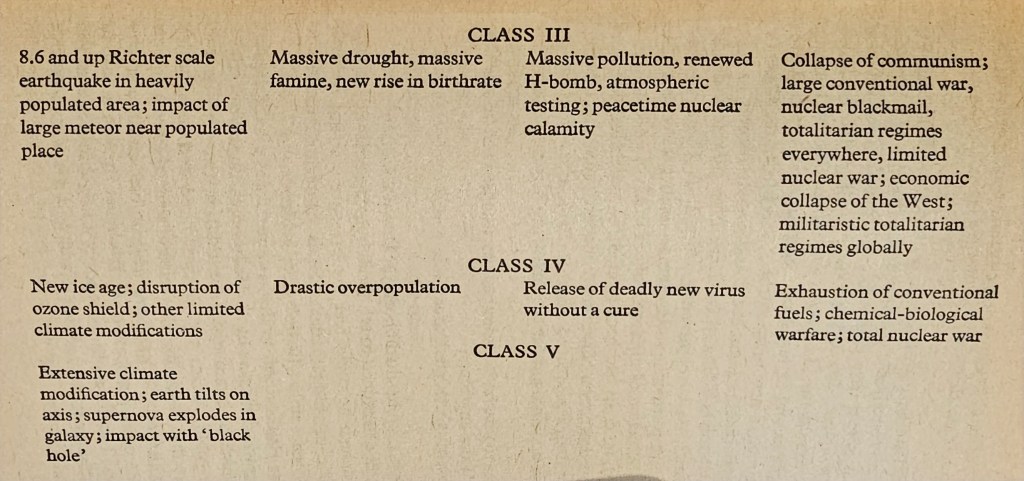
Then there was this – not entirely dissimilar in concept to the old CESG Impact Level Tables.
Personally I would move the deadly virus in CLASS IV into the Biological column, replacing it with global atmosphere no longer safe to breathe; UV dangerously high.
Plus add items into the empty spaces in the CLASS V row; maybe something like:
- Biological: collapse of global ecosystems; global famine
- Ecological: atmosphere lethal globally; no UV filtering at all
- Economopolitical: total breakdown of all governments – supranational, national, and local
Seems a shame to leave blank spaces in the Doom Table!
An Important Concept
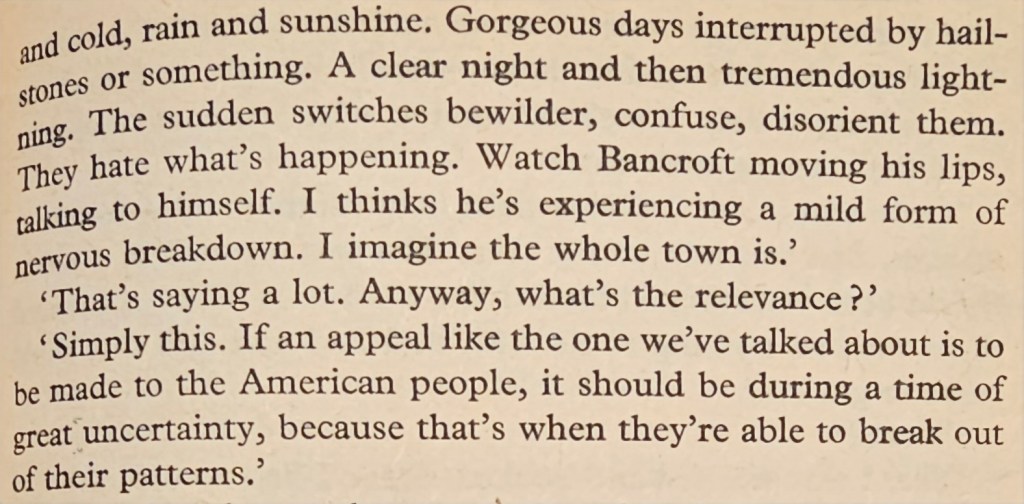
What really makes this book interesting to me is a short section about getting people to change their lifestyles to avoid catastrophy.
The concept here is that it isn’t climate change per se that will affect attitudes to change. It is the unpredictability and extreme variability of weather events that may give a route to successfully persuading people into changing their lifestyles. I wonder if any serious research has studied this?

TL;DR: Read it or not?
Despite poor characters and dated attitudes (“of its time”™️), the redeeming qualities make this book worth reading. The main subject matter is of critical importance to us all, as a species. Anyone under the age of about 30 might justifiably read this and ask “So why didn’t you do anything about it 50 years ago?!”. A good question, and one perhaps best answered now by actually getting on with doing something about it, rather than eternally kicking the can down the (increasingly arid and dangerous) road.

 Gânduri Eclectice - Eclectic Thoughts